


What is thrombotic thrombocytopenic purpura (TTP)?1
Thrombotic thrombocytopenic purpura (TTP) is a rare blood disease that causes small blood clots in blood vessels throughout your body.
Breaking down TTP: A rare blood disorder
The words that make up the acronym "TTP" can help explain what is happening in your body.

THROMBOTIC means blood clots form in the blood vessels.

THROMBOCYTOPENIC means having a lower number of blood platelets than you should. This happens because the platelets are clumping together to make the clots in your blood vessels.

PURPURA are purple bruises that are caused by bleeding under your skin. These bruises are a key symptom of TTP.
Types of blood flow
Normal blood flow
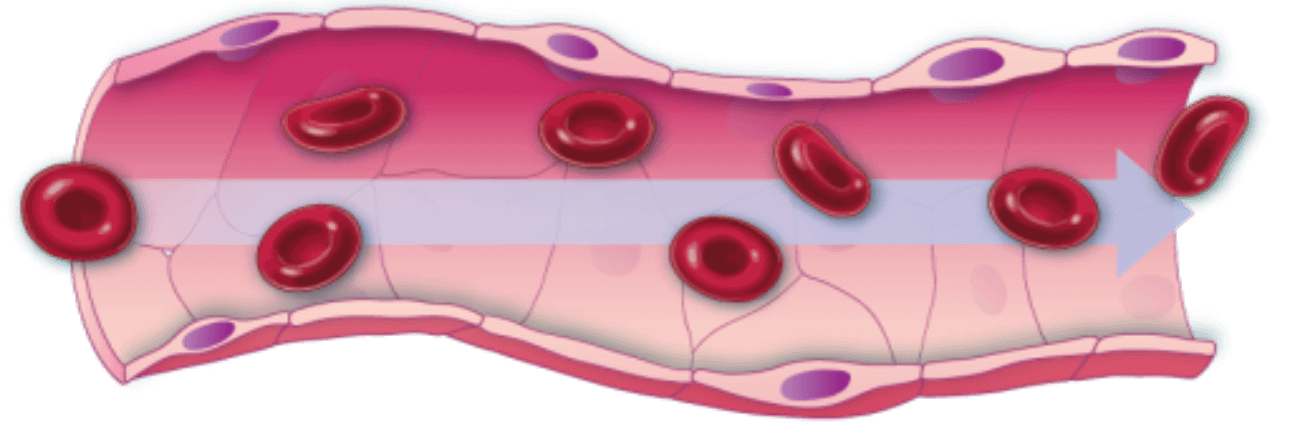
Blood vessels are tubes that carry blood through your body. A blood clot is a clump of blood cells, called platelets, that are stuck together. In normal blood flow, platelets float in your blood and form clots only when you need them to help you stop bleeding.
Blood clot in TTP
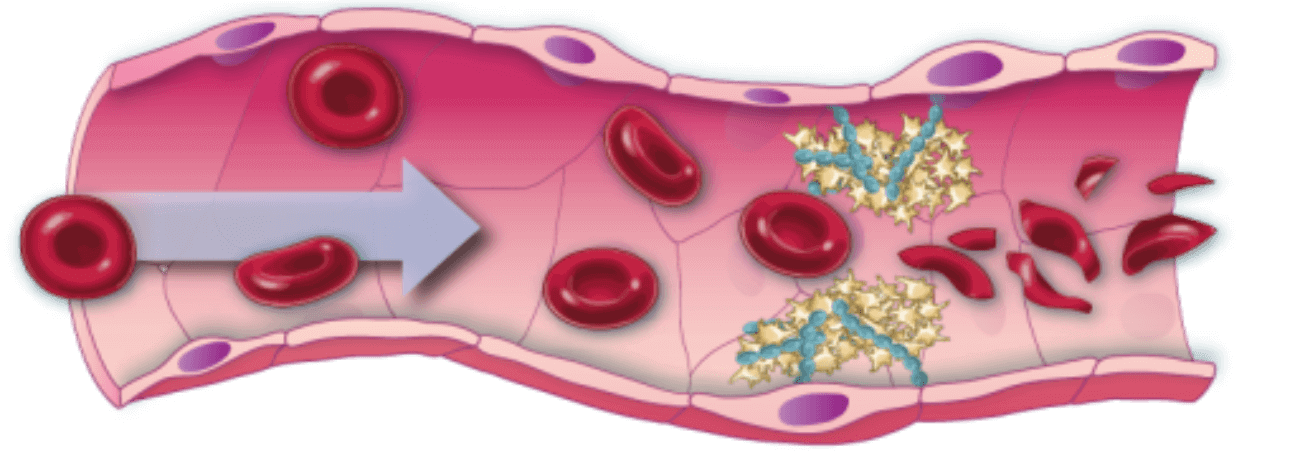
When you have TTP, platelets make clots when they’re not supposed to in a blood vessel. This makes it hard for blood to move through the blood vessel to get to the rest of your body.
When clots from TTP make it hard for blood to move through your body the right way, it can cause serious health problems like
-
Bleeding underneath the skin (bruising)
-
Not having enough platelets in your blood to make the clots your body actually needs (to help you stop bleeding)
-
Damage to the red blood cells, which carry oxygen through your body
-
Organ dysfunction that can result in serious events like seizures, heart attacks, or strokes
Who is affected by TTP?2-4
TTP can affect anyone, but it is more common in some groups of people than in others.
People are usually between

years old when they have their first TTP episode
Women make up

of people with TTP
Black people are

more likely to have TTP than people who are not Black
How rare is TTP?
TTP is a rare disease that affects 2 to 6 people per million.5
Types and triggers of TTP1,5-7
There are 2 types of TTP, acquired and hereditary. Acquired TTP is caused by a problem in your immune system. Hereditary TTP is caused by a problem in a gene passed down through your family. Both types of TTP lead to not having enough of a protein called ADAMTS13 in your blood. ADAMTS13 helps your blood flow normally and clot only when your body needs it.
Acquired TTP,2,5,8,9
also called immune-mediated TTP
- Is the more common form of TTP (95% of TTP cases are acquired TTP)
- Is caused by a problem in the immune system that results in low levels of ADAMTS13 in the blood
- Often develops in adulthood
- Is usually diagnosed after a serious health problem, which is considered the first TTP episode
Hereditary TTP,5,10,11
also called congenital or familial TTP
- Is a very rare form of TTP (5% of TTP cases are hereditary TTP)
- Is caused by a problem in a gene that is passed down through families and results in low levels of ADAMTS13 in the blood
- Often develops in early childhood
- Is usually diagnosed early due to the naturally low levels of ADAMTS13 present from birth
Diagnosing TTP involves reviewing a person's medical history, evaluating their symptoms, and conducting blood tests to evaluate ADAMTS13 activity.5
The cause of acquired TTP is unknown, but there may be certain triggers that can set off this rare and serious condition. This can be very frustrating, especially when you want to understand how or why you have developed TTP.1,6,12,13
Potential TTP triggers1,6,12,13

Personal health conditions, including cancer, HIV, and lupus

Certain treatments and/or medicines

Infections

Pregnancy
Are you or someone you love in the hospital with TTP?
Frequently asked questions about TTP
- Acquired TTP, which happens when the immune system mistakenly attacks the body
- Hereditary TTP, which is passed down through families
TTP is a rare, life-threatening blood disorder that can be fatal if left untreated. Early treatment is crucial to avoid severe complications.4,5
No. TTP is a rare but serious blood disorder—it is not cancer.1,4,5
Sometimes, the symptoms of TTP can look similar to other conditions related to cancer, which can make diagnosis more complex.1
Yes, in some cases TTP can run in families. This is called hereditary or congenital TTP, and it happens when a person is born with a change in a gene that affects an important blood-clotting protein.5
Yes. There are two main types5:
Acquired TTP is the more common type.5
References: 1. Joly BS, Coppo P, Veyradier A. Thrombotic thrombocytopenic purpura. Blood. 2017;129(21):2836-2846. 2. Sukumar S, Lämmle B, Cataland SR. Thrombotic thrombocytopenic purpura: pathophysiology, diagnosis, and management. J Clin Med. 2021;10(3):536. doi:10.3390/jcm10030536 3. Terrell DR, Williams LA, Vesely SK, Lämmle B, Hovinga JAK, George JN. The incidence of thrombotic thrombocytopenic purpura-hemolytic uremic syndrome: all patients, idiopathic patients, and patients with severe ADAMTS-13 deficiency. J Thromb Haemost. 2005;3(7):1432-1436. 4. Azoulay E, Bauer PR, Mariotte E, et al; Nine-i Investigators. Expert statement on the ICU management of patients with thrombotic thrombocytopenic purpura. Intensive Care Med. 2019;45(11):1518-1539. doi:10.1007/s00134-019-05736-5 5. Zheng XL, Vesely SK, Cataland SR, et al. ISTH Guidelines for the diagnosis of thrombotic thrombocytopenic purpura. J Thromb Haemost. 2020;18(10):2486-2495. doi:10.1111/jth.15006 6. Tsai H-M. Pathophysiology of thrombotic thrombocytopenic purpura. Int J Hematol. 2010;91(1):1-19. doi:10.1007/s12185-009-0476-1 7. Thomas MR, de Groot R, Scully MA, Crawley JTB. Pathogenicity of anti-ADAMTS13 autoantibodies in acquired thrombotic thrombocytopenic purpura. EBioMedicine. 2015;2(8):942-952. doi: 10.1016/j.ebiom.2015.06.007 eCollection 2015 Aug. 8. Scully M, Cataland SR, Peyvandi F, et al. Caplacizumab treatment for acquired thrombotic thrombocytopenic purpura. N Engl J Med. 2019;380(4):335-346. doi:10.1056/NEJMoa1806311 9. Reese JA, Muthurajah DS, Kremer Hovinga JA, Vesely SK, Terrell DR, George JN. Children and adults with thrombotic thrombocytopenic purpura associated with severe, acquired Adamts13 deficiency: comparison of incidence, demographic and clinical features. Pediatr Blood Cancer. 2013;60(10):1676-1682. 10. Congenital thrombotic thrombocytopenic purpura. NIH Genetic and Rare Diseases Information Center website. Updated July 12, 2018. Accessed December 3, 2021. https://rarediseases.info.nih.gov/diseases/9430/congenital-thrombotic-thrombocytopenic-purpura 11. George JN, Cuker A. Hereditary thrombotic thrombocytopenic purpura (TTP). UpToDate website. Updated August 22, 2021. Accessed December 3, 2021. https://www.uptodate.com/contents/hereditary-thrombotic-thrombocytopenic-purpura-ttp 12. Goel R, King KE, Takemoto CM, Ness PM, Tobian AAR. Prognostic risk-stratified score for predicting mortality in hospitalized patients with thrombotic thrombocytopenic purpura: nationally representative data from 2007 to 2012. Transfusion. 2016;56(6):1451-1458. doi:10.1111/trf.13586 13. Stylianou K, Tsirakis G, Mantadakis E, et al. Refractory thrombotic thrombocytopenic purpura associated with oral contraceptives and factor V Leiden: a case report. Cases J. 2009;2:6611. doi:10.1186/1757-1626-2-6611