


What are the signs and symptoms of TTP?
Since thrombotic thrombocytopenic purpura (TTP) is different for everyone, each person’s symptoms or combination of symptoms will be different. The important thing to know is that having TTP symptoms is a sign that you are experiencing a medical emergency and you need to see your doctor right away.1,2
Recognizing TTP symptoms
TTP is a rare but serious blood disorder. The symptoms of TTP can appear suddenly and last for days, weeks, and in some cases, months. These symptoms are caused by blood clots, a low platelet count, and damaged red blood cells, and can vary widely in severity.3-5 Learn more about what causes TTP in the body.
There are 2 main types5
- Acquired TTP, which happens when the immune system mistakenly attacks the body
- Hereditary TTP, which is passed down through families
Acquired TTP is the more common type.5
Early signs and progressive symptoms of TTP blood disease
The early signs of TTP are often nonspecific, making it difficult to diagnose. These symptoms may include2,4
Weakness
Confusion
Headache
Nausea
(sickness in your stomach)
Vomiting and diarrhea
As the disease progresses, symptoms specific to organ injury may develop. These can include neurological problems (like stroke, coma, and seizures), chest pain, and sudden kidney failure.1,4,6
There can also be other TTP symptoms like2,4,7
Purpura (red, purple, or brownish-yellow bruises on your skin)
Petechiae (small, flat, red spots under your skin)
Paleness or jaundice (a yellowish color of the skin or whites of the eyes)
Fever
Extreme tiredness
Fast heart rate or shortness of breath
Headache, speech
changes, and confusion
TTP can be life-threatening, so getting diagnosed and starting TTP treatment early is crucial for a better chance at managing symptoms.8
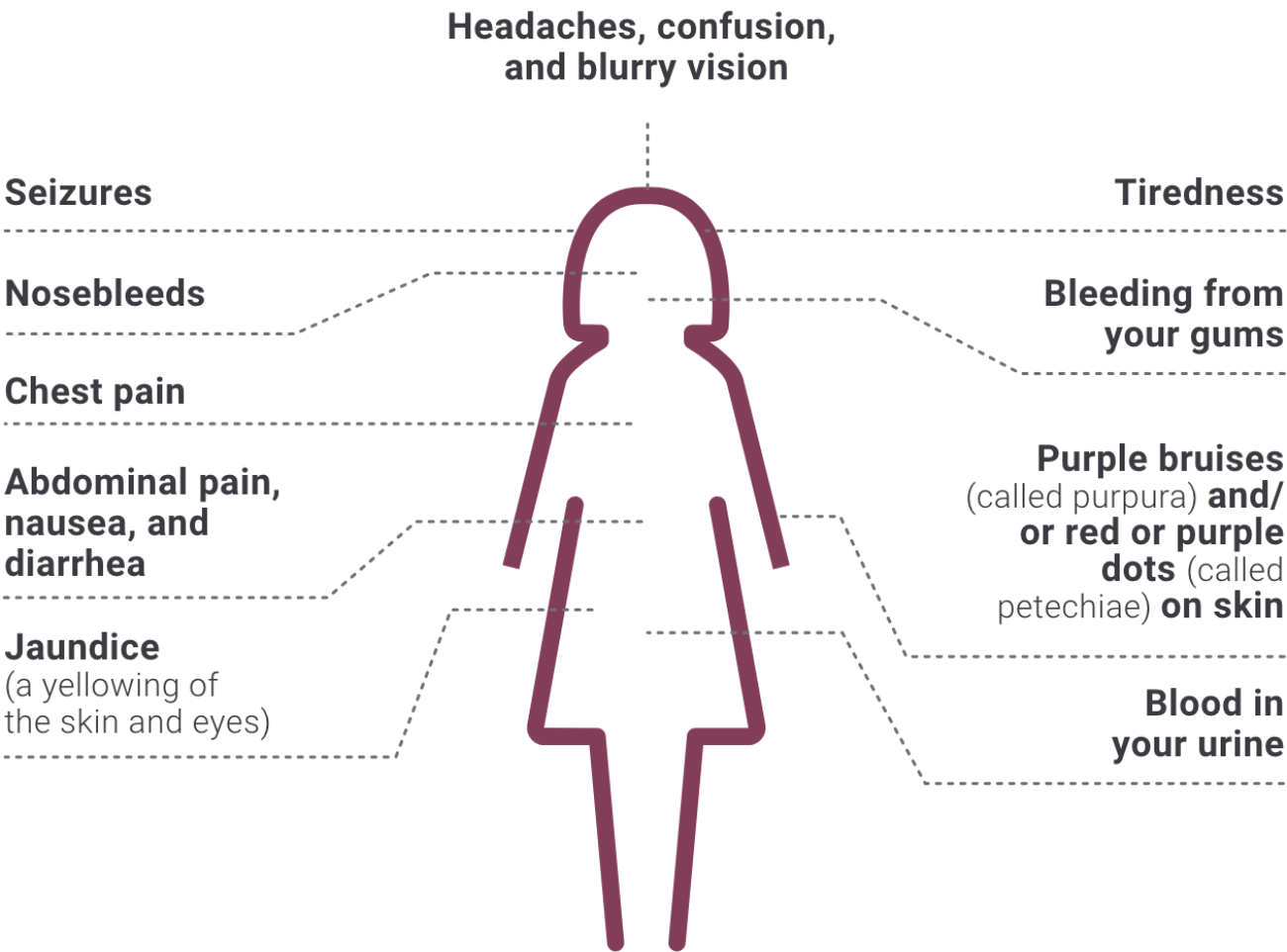
Symptoms of TTP may include1,2
The impact of TTP symptoms

“Common symptoms are recorded as being confusion, bruising, pinprick rash, stomach upset, headache — these are the range of things that can be indicative of a TTP episode.”
–Jo, living with TTP
Symptoms in people with TTP can vary depending on where clots form in their body.
Learn what happens in your body when you have TTP.
Medical history, symptoms, and blood tests all help to diagnose TTP.
References: 1. Joly BS, Coppo P, Veyradier A. Thrombotic thrombocytopenic purpura. Blood. 2017;129(21):2836-2846. doi:10.1182/blood-2016-10-709857 2. Scully M, Hunt BJ, Benjamin S, et al; British Committee for Standards in Haematology. Guidelines on the diagnosis and management of thrombotic thrombocytopenic purpura and other thrombotic microangiopathies. Br J Haematol. 2012;158(3):323-335. doi:10.1111/j.1365-2141.2012.09167.x. Epub 2012 May 25. 3. Saha M, McDaniel JK, Zheng XL. Thrombotic thrombocytopenic purpura: pathogenesis, diagnosis and potential novel therapeutics. J Thromb Haemost. 2017;15(10):1889-1900. doi:10.1111/jth.13764 Epub 2017 Jul 27. 4. National Heart, Lung, and Blood Institute. Thrombotic Thrombocytopenic Purpura (TTP). National Institutes of Health. Updated February 18, 2025. Accessed May 21, 2026. https://www.nhlbi.nih.gov/health/thrombotic-thrombocytopenic-purpura 5. Zheng XL, Vesely SK, Cataland SR, et al. ISTH Guidelines for the diagnosis of thrombotic thrombocytopenic purpura. J Thromb Haemost. 2020;18(10):2486-2495. doi:10.1111/jth.15006 Epub 2020 Sep 11. 6. Chiasakul T, Cuker A. Clinical and laboratory diagnosis of TTP: an integrated approach. Hematology Am Soc Hematol Educ Program. 2018;2018(1):530-538. doi:10.1182/asheducation-2018.1.530 7. Azoulay E, Bauer PR, Mariotte E, et al; Nine-i Investigators. Expert statement on the ICU management of patients with thrombotic thrombocytopenic purpura. Intensive Care Med. 2019;45(11):1518-1539. doi:10.1007/s00134-019-05736-5 Epub 2019 Oct 7. 8. Soto-Mora JA, Gómez-Espitia LM, Lasalvia P, Castellanos Moreno CA, Casallas Vanegas CA, Londoño Gutiérrez SA. Effectiveness and safety of caplacizumab in acquired thrombotic thrombocytopenic purpura: health technology assessment and classification according to the methodology established in Colombia. Int J Technol Assess Health Care. 2023;39(1):e48. doi:10.1017/S0266462323000442